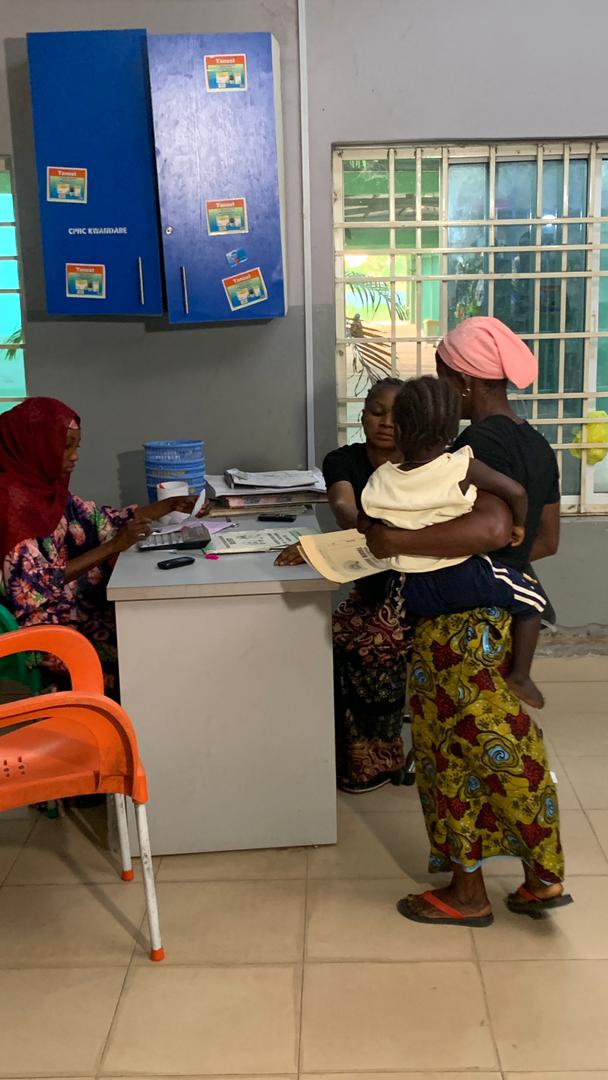
Government and local manufacturers, buying and supplying together.
ARC_ESM designed and governs the Marriage PPP and led the design of Nigeria's national Group Purchasing Framework with PMG-MAN and the Health Commissioners Forum.
Pooled
Marriage PPP✦Group Purchasing Framework✦PMG-MAN✦Health Commissioners Forum✦Local Manufacturing✦Self-funded since 2025✦Marriage PPP✦Group Purchasing Framework✦PMG-MAN✦Health Commissioners Forum✦Local Manufacturing✦Self-funded since 2025✦Marriage PPP✦Group Purchasing Framework✦PMG-MAN✦Health Commissioners Forum✦Local Manufacturing✦Self-funded since 2025✦
PPP DMAs
0
11 active
Private partners
0
Manufacturers and distributors
GPF commodities
0
Primary health care
Round 1
₦132.3bn
Annual procurement, June 2026
For years, partnerships between government and local pharmaceutical manufacturers in Nigeria were strained by delayed payments, fragmented procurement systems and weak supply chain coordination – leaving clinics short of medicines and eroding trust between industry and government. Through a partnership between ARC_ESM and PMG-MAN, a new model is changing that story.
The Marriage PPP
ARC_ESM designed and governs the “Marriage PPP”, which links State Drug Management Agencies (DMAs) directly with local pharmaceutical manufacturers and distributors, in partnership with the Pharmaceutical Manufacturers Group of the Manufacturers Association of Nigeria (PMG-MAN).
The model secures quality-assured medicines at negotiated, locked-in prices, on-time-in-full delivery and immediate withdrawal of substandard products, with credit facilities for States that lack capital to procure commodities. From a 2021 pilot with one State DMA and three manufacturers, it has grown to 14 DMAs and 32 private sector partners, and since 2025 has been fully funded by State governments and suppliers.
Marriage PPP growth
From a 2021 pilot to today
1
DMAs · 2021
14
DMAs · today
3
Partners · 2021
32
Partners · today
Brokered State partnerships
In Zamfara State, the State Government and 12 local pharmaceutical manufacturers signed a Memorandum of Understanding facilitated by ARC_ESM, bringing safe, quality medicines closer to every family.
Every family deserves access to safe, quality medicines when they need them.
The Group Purchasing Framework
Responding to a call from State Health Commissioners to pool demand, ARC_ESM then led the design of the national Group Purchasing Framework (GPF) with PMG-MAN and the Health Commissioners Forum, informed by Arizona State University research showing price variations of up to 276% for the same essential medicines across States.
Under the GPF Master Service Agreement (July 2025), 18 member DMOs (16 State DMAs and 2 private) and 31 pre-qualified suppliers procure 81 primary health care commodities against binding delivery, quality and shelf-life standards. In June 2026, Round 1 allocated ₦132.3bn in annual procurement (623.8M units), the first coordinated annual demand allocation for primary health care commodities in Nigeria.
The procurement cycle
How pooled demand reaches facilities
Price variation
Up to 276%
Same medicine across States (ASU)
Oxytocin
₦105–₦375
Per unit, across States
Modelled savings
₦289M
4 States · 14 MNCH medicines
Product lines
1,000
Now accessible to States
Public health impact
Health facility coverage
Reached through State PPP agreements
Kano
Borno
Yobe
Bauchi
Coverage before and after PPP agreements
BeforeAfter
Kano
Before
~30%
After
92%
Yobe
Before
0%
After
72%
◆Expanded access to essential medicines at primary health care level: States now access up to 1,000 product lines, well beyond the National Essential Medicines List, including more than 20 maternal, newborn and child health and malaria commodities such as oxytocin, misoprostol, artemisinin-based combination therapies (ACTs), oral rehydration salts, amoxicillin and IV fluids.
◆Wider health facility coverage and fewer stock-outs: coverage grew from about 30% to 92% in Kano and from 0% to 72% in Yobe, while Borno and Bauchi reached 80% and about 70% within the first year of their PPP agreements. Kaduna eliminated oxytocin stock-outs across 71 primary health care facilities.
◆Faster emergency response: in January 2022, a Yobe PPP partner redirected its intravenous infusion supply to meet the State’s seasonal cholera surge, contributing to markedly lower cholera mortality than the State’s historical pattern.
◆Lower prices through pooled demand: ASU modelling estimated ₦289 million in savings across just four States and 14 maternal and child health medicines; oxytocin, for example, ranged from ₦105 to ₦375 per unit across States.
◆A national, self-funded procurement platform: under the GPF Master Service Agreement (July 2025), 18 member DMOs (16 State DMAs and 2 private) and 31 pre-qualified suppliers procure 81 primary health care commodities against binding delivery, quality and shelf-life standards. In June 2026, Round 1 allocated ₦132.3 billion in annual procurement (623.8 million units), the first coordinated annual demand allocation for primary health care commodities in Nigeria.
How a supplier joins the GPF
01
Express interest
Contact ARC_ESM or request a company visit – as Drugfield Pharmaceuticals did – to understand the framework.
02
Pre-qualify
Meet the Master Service Agreement's binding delivery, quality and shelf-life standards.
03
Supply
Respond to pooled demand allocated across member DMOs.
04
Grow
Build long-term, trusted supply relationships with States.
Our sister organisation ARC Africa supports the UN Economic Commission for Africa on a Centralised Pooled Procurement Mechanism across pilot countries – part of the same continental push for pooled demand.